YES NO


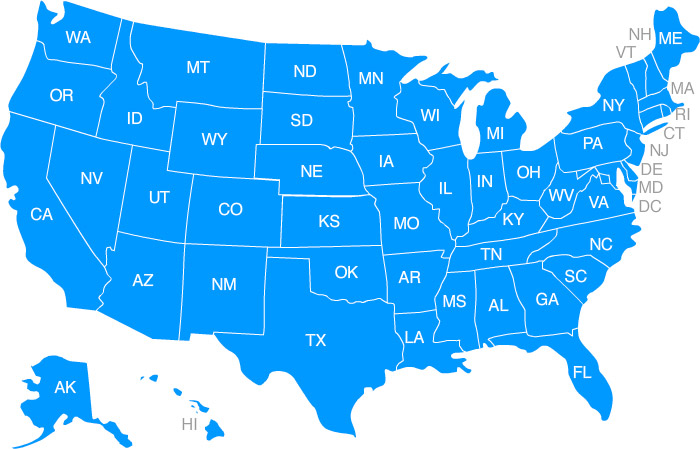
Coverage by Region Map

Coverage by Region:


Resources:

Articles:

Links:

Wisconsin Affordable Health Insurance Quotes
Find individual coverage and cheap family plans. Compare coverage.

Affordable Wisconsin health insurance quotes are now just a few clicks away. Health Insurance Online connects you with leading Wisconsin Health insurance companies who provide you with free, no obligation quotes. Simply complete the "Get Free Quotes" form at the top of the page, compare individual and family health insurance plan options, and then select the health insurance policy that is right for you. Wisconsin health insurance plans include Health Maintenance Organization Plans (HMO Plans), Preferred Provider Organization Plans (PPO Plans), Health Savings Accounts (HSA) and many others. It's now possible to find cheap health insurance in Wisconsin by shopping all your health insurance options. There are many great resources to explore on Health Insurance Online that will help educate you about health insurance.

Last Updated: Sep/02/2010

Wisconsin Health Insurance Companies Unaffected by Health Reform Legislation

Companies offering Wisconsin-based state health insurance plans are perceived to be largely unaffected by one change under health care reform, unlike their national counterparts. That change is the requirement that $0.80 of every dollar in premiums from individuals and employers be spent on medical care. "We don't have any concern at all about being able to meet those minimums," said Gary Lenth, medical director of Gundersen Lutheran Health Plan, part of the La Crosse health system. Lenth says that Gundersen uses 90 percent of its premiums to fund medical care.

Wisconsin Health Insurance News:

... loading ...

For the vast majority of Americans, paying for medical costs out of pocket is out of the question. Health insurance reduces the financial risks associated with medical visits, procedures, illness, and medications/supplies. With most traditional health plans, your chosen insurance company guarantees payment of a large portion of your medical bills in return for a premium (monthly payments to the insurance company based on individual criteria) and, depending on your coverage, certain percentages of your total cost up to an agreed amount. There are many different types of health insurance coverage ranging from individual health insurance, health insurance for seniors, employer-group insurance, and state-sponsored insurance for low-income individuals. An insurance company creates their revenue by pooling the premiums of policy holders. For example: you are an individual paying $75 per month. In one year, you had only one health checkup and a minor ankle sprain totaling only $150. Your total premium for the year cost you $900 generating a profit of $750 for your insurance company. Your neighbor, on the other hand, was in and out of the hospital for knee surgery. By pooling their premiums, insurance companies are able to pay for situations like this and still generate the profit needed to provide affordable health insurance. With increasing developments in the medical world, the average lifespan of humans has risen dramatically. It now costs insurance companies more to provide care and with rising premiums, it is more important than ever to understand your health insurance and how to utilize your coverage.

Understanding Wisconsin Health Insurance

Most insurance companies function very similarly across the United States, but it is very important to understand the terms your provider will use. There are many terms you should familiarize yourself with including words like:

  • Coverage: The circumstances your insurance company will “cover” the costs of.
  • Premium: The monthly/yearly payment to your insurance company in return for their coverage.
  • Deductible: A base amount you will pay in one year before your insurance company will begin their coverage. After this point, you will only be responsible for you “co-payments”.
  • Co-pay: A small, fixed percentage or amount of your accrued costs. Your insurance company is responsible for the remainder.
  • Preexisting Condition: A condition that is excluded from coverage because you were seen or treated by a doctor before beginning coverage with your current insurance company.
  • HSA: A Health Savings Account gives policy holders the opportunity to set aside monies (tax-free) for costs such as co-payments, prescriptions, dental and eye costs, supplemental vitamins, and other forms of specialized treatments.
  • PPO: A Preferred Provider Organization is a network of care-providers (physicians, clinics, etc.) who offer lower costs as an incentive for policy holders to stay within the network. Seeing a physician outside of your insurance company’s PPO would require you to pay the entire fee up front and submit it for reimbursement, while staying within the PPO might cost you a co-payment of only $10.
  • HMO: A Health Maintenance Organization is geared more for groups rather than individuals. They offer the lowest costs, but the least amount of flexibility in choosing your physicians. Though you may not have any co-payment, you are required to see only HMO providers. Seeing physicians outside of this network will cost you the entire fee.

Always be sure to understand exactly what your health insurance provider is selling you and how it works. If you do not understand – ask.

What Insurance Does Wisconsin Cover?

Major medical coverage is offered by many insurance companies as 1) your sole source of coverage, covering only expenses associated with a major catastrophe and/or 2) a supplemental insurance guarding against major medicals expenses in a case such as cancer, heart attacks, etc.

Short-term insurance is also an option should you be in between jobs. Short-term is purchased for a set amount of time, often times very helpful for families experiencing job transitions.

Group insurance is most often available to companies with numerous employees. Group rates are determined by the number of employee ensured. This is often times the best policy for those suffering chronic health problems. Rates are determined solely by the group versus individual assessment. Should your family experience serious health conditions, you may be eligible for Wisconsin’s Family or Medical Leave Act – requiring employers with 50+ employees to allow you to care for your family. Under the federal law, COBRA requires employers with 20+ employees to offer health benefits up to 18 months following voluntary or involuntary termination.

Individual health insurance is perhaps the most flexible though not necessarily most affordable insurance for Americans. Individual insurance allows you to purchase plans tailored for your health needs.

Medicaid SCHIP is Wisconsin’s federal program for low-income families with children. The State Children’s Health Insurance Program is a flexible federal program that allows states to offer a variety of plans, but is held to a basic standard of provisions for children’s health insurance. Eligibility is based on the number of family members and income.

Medicare is the nation’s largest insurance program, also offering insurance for disabled and/or blind residents. Medicaid is also a federal insurance program offering insurance for low-income residents/families. Also based on family members and income.

Wisconsin also offers a program for the uninsurable. The Wisconsin Health Insurance Risk Sharing Plan (HIRSP) offers two different plans for those not eligible for Medicare – residents of Wisconsin who are unable to obtain any insurance.

Cheap Wisconsin Health Insurance

There are so many insurance companies offering cheap health insurance, how do you decide who to place your trust in? Simply by googling health insurance companies in Madison, the search engine will come up with more than half a dozen of local companies not including national companies such as Blue Cross Blue Shield or State Farm Insurance. Major cities like Milwaukee, Appleton-Oshkosh, Green Bay, and Racine will also generate large lists of insurance companies offering their services. Where do you even begin? Actually…you start at home. By understanding what you need and value the most in your health coverage, you will be able to sort through seemingly endless options and find the right plan for you. Your premium costs will vary based on your health history, dependents, income, age, and other variables.

First, you will need to evaluate your past and present health. What is your health history? What is your family’s health history? If you have been plagued by health issues and have had preexisting conditions, you will probably want to look at a plan that forgives preexisting conditions after a set period of time. If not, you’ll have a greater amount of flexibility in choosing your plans. Concerning the overall health and history of your family – insurance companies will ask if there is a history of high cholesterol, blood pressure, heart disease, and other conditions present in your family. If your family has a history of cancer, you will want to be sure that your plan offers some type of coverage.

Other important factors in choosing your health insurance are dependents. Are you married? Do you have children? Often times if you are paying for your insurance individually, it is cheaper to insure your spouse and your children separately. Assess how much you are able to pay for premiums. Great health coverage with unaffordable premiums can be devastating. Should you find yourself swimming in medical costs, but making just enough money not to qualify for low-income insurance, Wisconsin offers the Medicaid Deductible program. You may qualify if you are: pregnant, under 19, elderly or disabled. Wisconsin also offer other Medicaid programs for women with cervical or breast cancer, disabled and/or elderly adults (65 and older), low-income families, and long-term care options.

If you are self-employed, you will need to decide what individual or business plans are available. Should your employer offer insurance, it is often times much more cost-effective (employers often get insurance cheaper through large group plans, therefore, lowering your premium costs). Whether you have health insurance through an individual or a group plan, you may want to consider an HSA.

Are you interested in lower premium payments or lower deductibles? Depending on your answer, you should closely compare the benefits of PPOs and HMOs. If you want the flexibility of choosing your own doctors, providers, and services, both your premiums and deductibles will be higher. By choosing a plan providing a PPO or HMO, you will be able to save on both. With a higher deductible (or out of pocket expenses), you will save on your monthly (or bi-yearly/yearly) payments, but by paying higher premiums, you ensure a much lower deductible and overall out of pocket expenses.

Age is a large factor in insurance policies. In Wisconsin, an elderly resident (65 or older) may apply for Medicare. Depending on your coverage choices, your premiums may vary by the hundreds. Medigap is also another national program that offers coverage for “gaps” within Medicare’s plans.

Wisconsin Insurance Companies

Some of the top health insurance companies in Wisconsin are also national insurance companies fitting their policies and plans for each state. Blue Cross Blue Shield is a health insurance provider for multiple states. Detailed descriptions of their policies, plans, deductibles, etc., can be viewed online. Plans can also be purchased online. HumanaOne and Assurant Health are also national health insurance companies offering free health insurance quotes online. Badger Care Health Insurance is available exclusively to Wisconsin residents who are under the age of 19 regardless of income and families needing insurance. Acceptance into this program can be a painstaking process.

Regardless of your choice of provider, the state of Wisconsin is committed to providing you with the quality and care you need.

©2010 Health Insurance Online. All rights reserved.